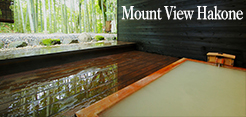

Nature Museum
Hakone with its 11,166 hectares in extent, has everything to offer its visitors. To begin with, it has a 400,000 year old active volcano, a caldera lake, and hot springs.
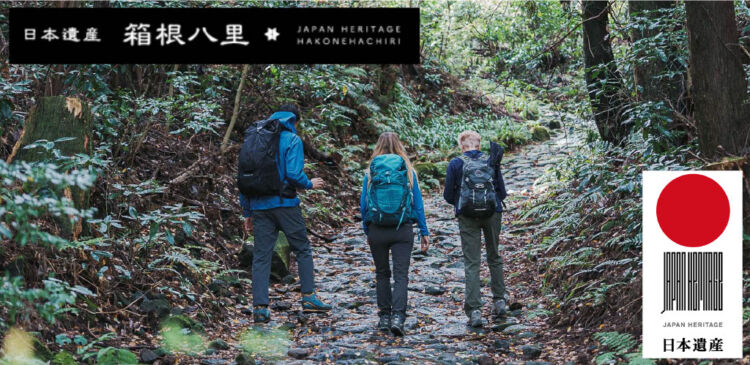
And for natural surroundings, Hakone has marshland, beech trees, spring pink colored azalea , cherry blossom, a mountain colored in fall, and over 120 species of wild birds. This is not to mention the 1,800 species of wild plants. There are more than 20 hiking trails that enable one to explore. Other than its pleasing environment, Hakone has additional historical interests; for instance the old stone-paved Tokaido Way. Resorts and villas in plenty cater for the needs of long stay guests. Fuji-Hakone-Izu National Park was designated as a national park in 1936, a testimony to the relationship between the residents who have long lived in harmony with nature.
Fuji-Hakone-Izu national park consists of a special protection zone, special zone (Class Ⅰ, Ⅱ, Ⅲ). The ordinary zone is based on the ecosystem, requirements for protecting existing resources, and also, the facilities enabling visitors with easy access to experience surrounding nature. A system of zoning aims to strike a balance between the areas’ sustainability, and its basic need for protection.
Nature Conservation
The origins of public interest in nature conservation in Hakone can be traced back to 1914, and in 1936, Fuji-Hakone-Izu National Park was created.
After the Second World War, Hakone saw a sharp rise in the number of its visitors, owing to rapid economic growth, and an increase in personal income and leisure time.
For example, nine golf courses, cable cars, a ropeway, other recreational facilities, hotels, and the construction of many new villas were developed. But grave concern was also voiced over excessive development impinging on localized natural beauty. Residents, and those people sympathetic to the cause, formed an organization in 1966, for the conservation of wildlife, plants, and to preserve a cultural and historical heritage for future generations. This private organization was named “Hakone-wo-mamoru kai”, and to this very day, continues to sustain and maintain the rich legacy of Hakone now, and on into the future.
Legacy of Two Men
To commemorate the lives of Kaempfer and Birnie, a festival is held in Hakone each year in the month of April. To a considerable extent, Hakone owes the preservation of its natural beauty to Engelbert Kaempfer (1651–1716) and Cryril Montague Birnie (1868–1958), two Westerners.
Engelbert Kaempfer visited Nagasaki as a physician for the Dutch merchant office. Whilst in Japan, and on his way from Nagasaki to Edo (present day Tokyo), he passed through Hakone. On two separate occasions, he had an audience with the Shogunate. Then, after he had returned to his native Germany, he introduced Japanese history, geography, climatology, Japanese religion, flora and fauna. All these categories were included in his book, entitled “The history of Japan.”
The other notable cited—Cyril Montague Birnie, had moved from Melbourne to Japan, at the age of 21, and remained there until his death. He is remembered for the Stone plaques erected along the Tokaido Road to remind people of the environmental value of Hakone and to cherish it.
The following passage is taken from the introduction to Kaempfer’s History of Japan, published 27th April 1727. It recounts the Mighty and Powerful Empire.
And the following words are written that describe ‘’a Valiant and Invincible Nation, and Industrious and Virtuous People, possessed of a Country on which Nature has lavished Her Most Valuable Treasures. You who now stand at the point where the Old and New Ways meet, so act that this GLORIOUS FATHERLAND be transmitted to posterity ever more Beautiful, ever more Meritorious.’