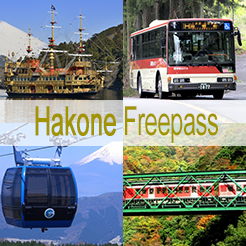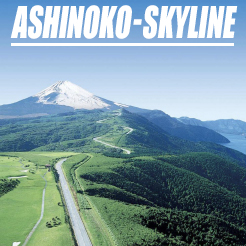

At the center of Hakone is Lake Ashi. This lake has many historical and cultural attractions along its shore in addition to the numerous outdoor activities that can be enjoyed. It is particularly famous for the photo of the red torii shrine gates with Mt. Fuji in the background. Lake Ashi formed at 724m above sea level in the spaces between the volcanic peaks of Hakone that have erupted since more than 650,000 years ago. The lake has a circumference of 19km and a depth of 43m. There is a hiking trail around the lake. Ashi means “reed” in Japanese and ko is “lake”. The lake can also be enjoyed on one of the leisure ships that make frequent runs between the northern and southern ports.
Legends
There is a story of a nine headed dragon, Kuzuryu, that lived at the bottom of Lake Ashi and tormented the villagers of the area. A wandering priest named Mangan came to the village and recited sutras to turn the dragon to good. The dragon now protects Hakone from natural disasters and calamities. There is a ceremony during a week of festivals in summer, Kosui Festival, with one day dedicated to the ceremony of throwing bales of rice to the bottom of the lake for the dragon and fireworks.
Historical Sites
Hakone Shrine
The gates of Hakone Shrine in Lake Ashi with Mt. Fuji in the background is one of the most iconic photos of Japan. The Hakone Shrine is a shinto shrine that has a long history dating back to 757. The shrine was closely associated with Minamoto Yoritomo the founder of the Kamakura Shogunate, when he sought refuge here after losing one of his first battles. The shrine became popular with samurai and well supported during the warring states period of Japanese history.
Hakone Checkpoint
The Hakone Checkpoint was set up at the beginning of the Edo period (1603-1868) under orders from the Tokugawa Shogunate (1600-1868) to control the movement of citizens.
Onshi Park
This now public park was once the location of the imperial summer retreat in the early 1900’s. There are beautiful gardens and views of Lake Ashi and Mt. Fuji.
Suginamiki, Cedar Avenue
These trees are more than 400 years ago and were planted by the Tokugawa Shogunate to provide travelers on the Tokaido Road protection from the sun, wind, and rain.
Outdoor Activities
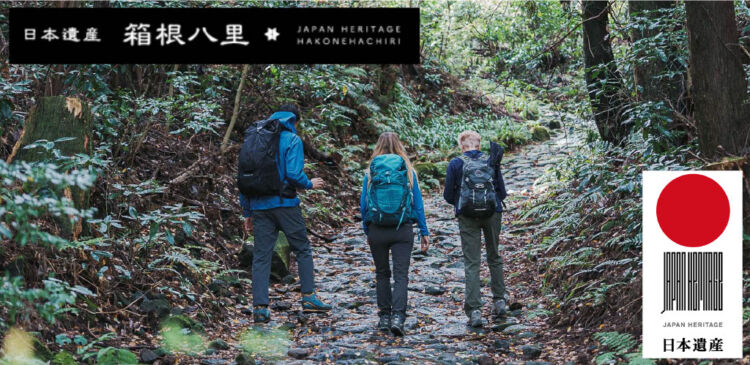
Lake Ashi sits in a beautiful natural surrounding and outdoor activities are a great way to enjoy this area of Hakone. Mountain biking tours are available on the north side as well as rental electric bikes in the area. Kayaking is also an option in the summer months. There are shops that sell fishing goods and the surrounding mountains are full of hiking trails. The Lake Ashi hiking course can also be suited to accommodate different times and difficulty levels.