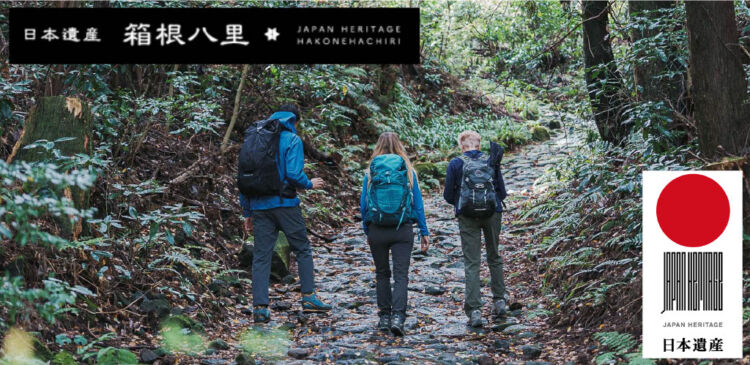
This long distance course runs along the western side of Lake Ashi through deep forests and quiet paths.
There is no development along most of this path so you can experience a walk through nature with a few historical sites along the way. This path will also allow you to visit historical buildings, the great cedar avenue, sandy lake beaches, and views of Mt. Fuji. The course starts in the northern Togendai/Kojiri area and takes you to Moto-Hakone on the south side of the lake. There is public transportation access at the start and end of this trail, but nothing in between. Here are some of the historical sites you can see along the Hakone Nature and History Course starting from the north side. The 1280 meter long Fukara Watergate tunnel was completed in 1670 to bring water from Lake Ashi to newly created rice paddy fields. This was an impressive engineering accomplishment for the time. Engineers began digging the tunnel from two sides of the mountain and met with less than a 1m margin of error.
The Cedar Avenue in Moto-Hakone dates back to an order by the Tokugawa Shogunate to plant trees along the Tokaido Road running between Tokyo and Kyoto. This part of the road in Hakone is one of the best preserved portions of the road dating back almost 400 years. The trees were planted to protect travellers from the sun, wind, and rain. The towering trees connect visitors to the travellers of the past.
Onshi Park was once the summer retreat for the imperial family. The park was chosen for the views of Mt. Fuji, cool summers, and ease of protection. The site is now a free park with an exhibition hall modelled after the original western-style building that was destroyed in the Great Kanto Earthquake of 1923. The Japanese style gardens have well maintained trees and seasonal blooms can be enjoyed throughout the year.
The Hakone Checkpoint, Sekisho, was one of 53 stations located along transportation routes during the Edo Period (1603-1868) to control the movement of people and goods. After the Tokugawa Shogunate came to power they enacted strict regulations on the movement of people and goods to keep a strong hold on power. These checkpoints were strict in enforcing the movement of females and weapons. The Hakone Checkpoint became one of the most important because it was located on the Tokaido Road connecting Edo (modern day Tokyo) and Kyoto.
.slider{opacity:1!important;}
.idx-Content-pickup{display:none!important;}
.gallery_thumb{display:none!important;}