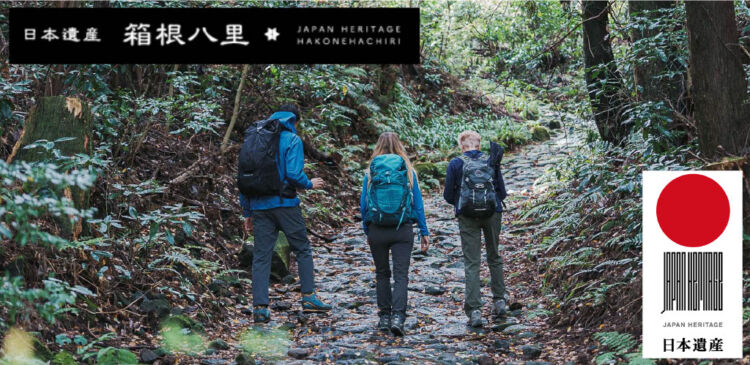

The Ishidatami is a preserved old stone paved section of the Old Tokaido Road in Hakone that was heavily used in the Edo period (1603-1868). The Tokaido Road was once the busiest road in Japan connecting the imperial capital of Kyoto with the new government center in Edo (modern day Tokyo). Under orders from the Tokugawa Shogunate (1600-1868) the roads of Japan were dramatically improved to encourage commerce and ease of travel. During the reign of the Tokugawa clan, daimyo (regional lords) were forced to spend alternating years in the city of Edo in a system called sankin kotai (alternate attendance). This policy was to strengthen control and test the allegiance of daimyo in far off domains. The daimyo travelled in large and extravagant entourages along the roads leading to Edo. The roads of Hakone were steep and often became muddy before the stones were placed and the improvement of them also showed the power and influence of the ruling Tokugawa clan. The Hakone portion of the 500km long Tokaido Road was one of the most difficult because of the steep Hakone terrain. The Ishidatami is included in the Hakone Hachiri and has been recognized by the government as a National Historic Site.
The Hakone Ishidatami was a source of material for the ukiyoe artist Hiroshige in the 19th century. His woodblock prints of Hakone are included in the set “53 Stations of Tokaido” and depict travellers walking the stone road over the Hakone mountains with Lake Ashi in the background. The famous scene shows the steep roads among the beautiful nature of Hakone.
Most heavy trade at the time was carried by boat, but messages would be run between Edo and Kyoto by courier. These men would run designated distances on the stone paved roads then pass off the message to another runner. This traditional form of messaging is the inspiration for the Hakone Ekiden, the annual collegiate marathon relay race that is one of the most popular sporting events in Japan.
In 1613, a group of Englishmen, some of the first Westerners to walk the road, remarked about the high quality of the sand, gravel, and stone work on the “wonderful even” road.
There are many small sections of the ishidatami remaining, but the cobblestones between the Amazake Teahouse and Lake Ashi are among the best preserved and give visitors the chance to feel like travellers in Japan long ago. This section of the path takes you through a thick forest away from the noises of modern life. This section can be reached by bus from Hakone Yumoto Station or from Moto-Hakone.