
Hakone is known far and wide as being a premier location for hot springs(onsen). Each year, it draws more than twenty million visitors. For it is rich in tourist attractions, outstanding natural beauty, plentiful hot springs (onsen), not to mention a veritable treasure trove of fascinating historical heritage. Indeed, Hakone and its immediate environment were awarded the status of one of Japan’s National Geoparks in September 2012. This new found recognition has given additional emphasis to the overall enjoyment of sightseeing in the Hakone region.
However, a further awareness is emerging of the connection between geographical characteristics that include Hakone’s rich environment, and the impact it has had on the everyday lives of local residents.
Over immeasurable periods of time, this area of hot springs and with richly varied topography are the natural legacy of continual volcanic activity. Once feared as a vision of hell with an active volcano and rugged terrain, one could well ask how Honone has gained its present reputation as a prime tourist destination ? In answer to this question, one needs to consider its regional history.
Some 400,000 years ago, a volcanic activity began which resulted in its present configuration.
Large scale eruptions had occurred repeatedly. In consequence, the existing landscape was transformed. Indeed, this volcanic activity is still in evidence. The magnitude of this most extensive eruption happened, more than sixty thousand years ago. The associated pyroclastic flow stretched to far—distant Yokohama, and the ejecta from the eruption even reaching Tokyo.
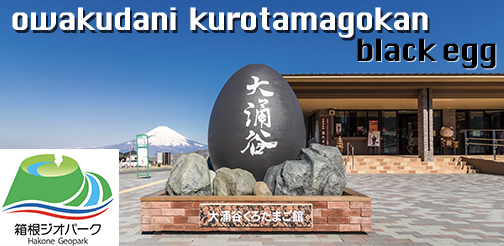
During the most recent large scale volcanic activity of some 3,000 years ago, lava domes were formed on the northern elevation of Mt. Kamiyama (1,438 m), Hakone’s highest peak. The second highest peak, Mt. Kanmuri, was then created. A part of Mt. Kamiyama evidently collapsed as a result of the eruption, causing the Hayakawa River to dam up with the debris, thereby forming Lake Ashinoko. The first eruption in Hakone’s recorded history occurred in Owakudani in June 2015. By good fortune, this was an explosion of steam on a relatively small scale, however, there were no casualties. Close to the crater, seven shelters were erected in the park, as a precautionary safety measure. An advanced observation system has also been initiated.
Within the Paleolithic period in the last 16,000 years ago, the Hakone region was an important source of obsidian, a valuable material for making stone tools. Clay potsherds have also been found in various places, dating to later geological periods. TheTokaido Way, or so-called East Sea Road, was laid out in the late seventh century, linking thereby eastern to western Japan. In those days, the route was diverted northward to avoid Hakone’s notoriously difficult terrain. The rugged landscape with its treacherous pathways deterred people from going to the area. In time, however, they looked upon this mountainous locality with a certain fear and reverence.
The mountain had become an object of worship in the minds of people. The predecessor of the present Hakone-jinja Shrine, the Hakone Gongen, literally meaning “incarnation,’’ was created in the mid-eighth century. Its founder was the priest Mangan Shonin, a devout Budhist ascetic. It was during this same period that Hakone realised its growing importance as a sacred mountain.
Japan’s Kamakura period at the close of the twelfth century saw the increase in the number of persons passing through Hakone on a regular basis. They sought the present ridgeline, known today as the Yusakamachi Trail hiking route. The founder of the Kamakura Shogunate, Minamoto no Yoritomo, continued to pay his respect though pilgrimage to the head priest of Hakone Gongen who had previously at one time saved him after a military defeat. Thereafter, believers from amongst Japan’s warrior caste, bushi or samurai, were attracted to Hakone Gongen. This Yusaka Road then became a route for pilgrims. However, the treacherous slopes of Mt.Hakone were considered akin to a passage through hell by the travelers of that time. Today, in the vicinity of Shojin ike pond, are lined with many stone Buddhas, that testify to the sanctity of the area where travelers had sought salvation from hell-fires.
By the end of the fifteenth century, Hakone had come under the rule of a powerful family, the Hojo clan, based in Odawara. The Hojo clan had held power for almost a century over five successive generations. However, at the pinnacle of its influence, the precincts of Sounji Temple were destroyed by fire, at the hands of Toyotomi Hideyoshi(1537-1598 or 1538-1598), thereby resulting in the fall of the Hojo clan.
When the Edo shogunate was established at the beginning of the seventeenth century, the route
to Hakone via Yusakamichi Road was no longer in use. Instead, there was a newly constructed road from Sanmaibashi Bridge across the Hayakawa River in Yumoto, running along the Sukumo River, through Hatajuku, eventually reaching the shores of Lake Ashinoko.
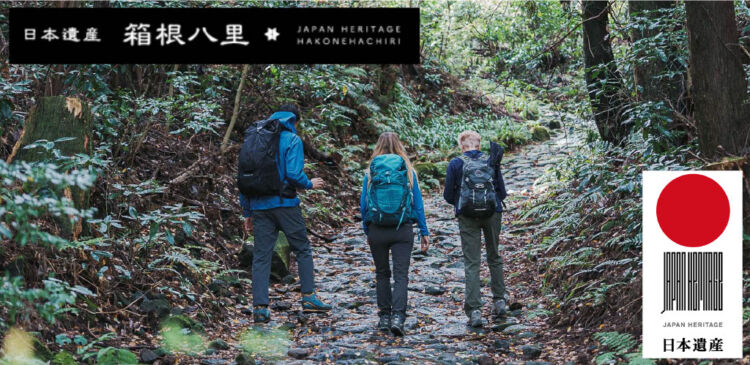
Starting in Odawara to its final destination in Mishima, this road known as the ‘’Hakone Hachiri’’ covered an approximate distance of 32 kilometers.
Even today one can still see the stone-paved road (ishidatami) with its stones that have been laid down to pave over the bare earth along the route. The ishidatami road has been designated as a National Historic Site together with Hakone’s Cedar Avenue (suginamiki). Many gradients were so steep, and the route extremely difficult to traverse, that it was said to “bring tears to the eyes as large as acorns.’’ Checkpoints (sekisho) were established during the Edo period, to check and control the flow of travelers. This entailed a greater hardship to those facing the journey.
The hot springs (onsen) of Hakone have a long history. Actually, the establishment of the Yumoto hot springs date back to the eighth century to the Nara period. Moreover, the existence of Ashinoyu hot springs that go back to the late eleventh century, in the Kamakura period, have been recorded in historical documents. The records of “taking the bath’’ by samurai for medicinal purposes have been found in Yumoto. At the commencement of the Edo period in the early years of the seventeenth century, there were already in existence, seven hot springs in the area—Yumoto, Tonosawa, Dogashima, Miyanoshita, Sokokura, Kiga, and Ashinoyu.
Visitors from all over Japan started to frequent the hot spring baths of Hakone, on account of their proximity to the metropolis of Edo, present day Tokyo. It did not take much time for those in cultural circles, to turn their attention to the beauty of the surrounding landscape, in seeking areas of outstanding natural charm. This knowledge became widespread through their writings. Hakone at one time, so much feared for its treacherous landscape, had soon made a transition to a worthwhile sightseeing destination.
Then, in the latter half of the Edo period, hot springs became ever more popularised through their increased use by common people.
Courtesy of Hakone Town History Museum
The dawning of the Meiji era coincided with the ending of travel by the existing route of treacherous ascent over Hakone, once the Tokaido trunk railway through Gotemba had opened in 1889, . Although Hakone was still visited by a new group of people who had come for sightseeing, it was mostly foreign visitors and those associated with the new government who came.
These same foreign visitors had discovered the attraction of Hakone from a different perspective than those found by Japanese visitors. They noticed the beautiful scenery presented by the mountains and the lakes, and the climate, more gentle than the extreme summer heat of elsewhere. Hakone had become a popular resort and sightseeing destination. The various hot springs baths were pleased to welcome foreign visitors. A hotel was established catering especially for foreign clientele. In addition, those persons working for the new government and in Japan’s cultural circles, started to visit the area to enjoy the onsen baths. Those were the same people who had moved to the new capital of Tokyo which was the center of politics.
Hakone had enjoyed a resurgence of popularity, guests breathing new life into the region.
Yukichi Fukuzawa, one such individual, had emphasized the importance of improving roads, thereby making those ryokaninns adjacent to the hot springs, more accessible for rickshaws. Acting on this advice, the ryokan inn proprietors were only too pleased to set up a network of rickshaws connecting various spas.
In 1875, work began to link Odawara and Yumoto-Yamazaki, and successive roadworks commenced with speedy resolution. Then in 1904, the road was opened, reaching the shores of Lake Ashinoko. Previously in 1888, a horse-drawn railway link from Kozu station on the Tokaido Main Line to Yumoto had been developed. The route linking the hot springs has become the major approach to Hakone, the National Highway No.1 of the present day.
Further development of hot springs was instigated by the new roads. For revolutionary technology had resulted in major advances, in drilling, pumping, and design of hot springs. And with other new technologies, a reliance on water pressure was no longer found to be necessary.
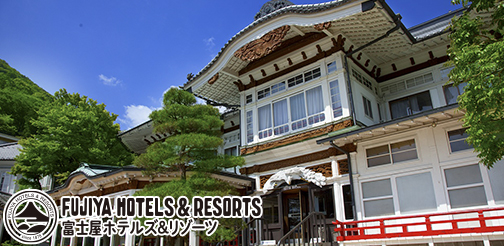
The Meiji era saw the increase of twelve new hot springs. At the present time, we can number twenty hot springs operating in the locality. Fujiya Hotel promoted the concept of second homes (besso) in the area, having in mind the wealthier members of society in the late Meiji era.
This trend was taken up on a large scale by developers on the property market for second home ownership. Hand in hand with these progressive developments, the addition of a number of important innovations, e.g. funicular railway, cable car, and hot springs continued at a fast pace to further existing Hakone’s tourism. This together with the designation of the area as a national park in 1936, led to the firm establishment of Hakone as a first class resort.
After 1945 at the end of the Second World War, there was a new era of rapid economic growth, which in turn, prompted the increased popularity of tourism. This, together with the rise of car ownership, brought many people to come to Hakone. Tourism increased on a large scale, boosted by a greatly improved road network, which promoted the development of new kinds of leisure facilities.
Although tourism had developed to its present extent, there has also been a growing recognition to strike the balance between an innovative touristic development on the one hand, and the need to conserve nature, on the other hand. A natural environment afforded by the status of a national park is, in itself, an important asset for tourism in the long term.
As mentioned previously, a fuller recognition of Hakone as a Geopark, is now contributing towards the promotion of a new kind of tourism.
Ukiyo-e: Courtesy of Hakone Town History Museum